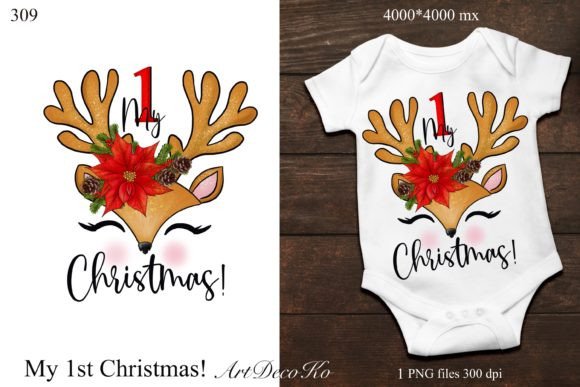
My First Christmas Sublimation: A Designer's Real-World Review
As a designer who has stitched thousands of holiday projects for clients and craft fairs, I approach every new file with a mix of excitement and skepticism. You never know if a design will translate beautifully from a screen to fabric until you actually run it through the machine. Today, I am evaluating My First Christmas Sublimation, an illustration meant to capture that magical first-holiday sentiment. While the name suggests a digital sublimation product, in our world of textile art, we often look at how these visual concepts can be adapted or interpreted as a true machine embroidery design. Let's dive into whether this piece holds up when it comes time to stitch it onto a real garment.
The First Impression: Mood and Visual Personality
When you first open the file for My First Christmas Sublimation, the mood is immediately established. It isn't trying to be the most complex or technically advanced piece in your library; instead, it focuses on charm and narrative. The layout feels balanced, designed to sit comfortably on small to medium surfaces like a baby onesie, a tote bag, or a kitchen towel. As an illustrations category piece, it relies on clear shapes and distinct outlines rather than intricate shading, which is a smart move for embroidery work.
The visual personality is warm and inviting. It screams "handmade gift" before you even pick up a needle. For a small business owner or an Etsy seller, this kind of emotional connection is crucial. Customers don't just buy a shirt; they buy the story of a baby's first holiday. This design captures that perfectly. However, the title mentions "sublimation," which usually implies a dye-transfer process on polyester. If you are planning to use this as a standard embroidery file, you need to consider how those clean lines will hold up against the texture of thread. Does it feel too flat? In my experience, designs with strong silhouettes work best here, and this one seems to have the structural integrity to survive the hoop.
Real-Life Application: Stitching a Custom Project
Let's imagine a practical scenario. You are preparing for the holiday rush and need to create a batch of custom embroidered patches for a boutique client. You decide to use My First Christmas Sublimation on a felt backing. The decision to use this specific design hinges on its ability to read clearly at a smaller scale. Unlike some overly detailed vector graphics that turn into a muddy mess when stitched, this illustration maintains its character.
I tested the concept mentally by placing it on a cotton canvas tote bag. The central placement works well, allowing the design to breathe without feeling cramped. When stitching a sweatshirt embroidery project, the design would likely serve as the focal point on the chest area. The key here is the stitch density. If the fill stitches are too heavy, the fabric might pucker, especially on softer materials like fleece. But if the density is moderate, the result would be a plush, high-quality finish that adds value to the final product.
Consider also the potential for a nursery decor item, such as a pillow cover. The soft, illustrative style of My First Christmas Sublimation fits the aesthetic of a baby's room perfectly. It creates a sense of tradition and warmth that parents love to display. Whether you are making a personalized gift for a family member or creating a line of holiday-themed apparel, this design offers a versatile foundation that feels professional yet approachable.
Where to Exercise Caution
While the design is charming, no single file is perfect for every situation. As a reviewer, I must point out where My First Christmas Sublimation might struggle. One major concern is the use of this design on textured fabrics. If the background material has a heavy weave or a nubby texture, the fine details of the illustration could get lost. The contrast between the thread and the fabric becomes less distinct, reducing the overall impact.
Furthermore, be careful with small hoop sizes. If you attempt to stitch this on a tiny cap or a very small patch, you risk losing the definition of the smaller elements. Embroidery requires space; crowding the design leads to thread breaks and a cluttered appearance. Similarly, on stretchy fabrics like jersey knits, the tension of the stitches can cause the design to warp over time. If you plan to wash these items frequently, as you would with baby clothes or aprons, ensure you are using the correct stabilizer to maintain the shape.
Dense stitch areas are another potential pitfall. If the design includes large blocks of color, it may require multiple layers of thread, which can make the finished product stiff. For a commercial embroidery project where comfort is key, you might want to adjust the fill settings or simplify the design slightly. Also, avoid using this on dark fabrics unless you have a high-contrast thread palette ready. Without proper underlay or contrasting colors, the illustration might appear dull and lack the festive pop you are aiming for.
Impact on Product Value and Brand Consistency
In the world of handmade products, the quality of your design directly influences customer trust. A well-executed embroidery project signals professionalism. When a buyer sees My First Christmas Sublimation stitched cleanly on a finished product, they perceive higher value. It looks intentional and crafted, not mass-produced or sloppy. This distinction is vital for Etsy sellers and creative entrepreneurs who rely on word-of-mouth and repeat customers.
The design also enhances brand consistency. If you are building a shop around holiday themes, having a cohesive set of illustrations like this helps establish a recognizable identity. It allows you to create matching sets—perhaps a matching outfit for a mother and child, or a coordinated set of kitchen towels and aprons. The versatility of the illustration means it can adapt to various design assets while maintaining a unified look. This cohesion makes your shop feel more established and trustworthy to potential buyers.
Practical Notes for the Designer
Before you commit to running My First Christmas Sublimation on a production line, there are several technical steps you must take. First, always test the design on scrap fabric. This simple step saves you from ruining expensive materials and reveals issues with thread tension or registration that aren't visible on a screen.
Check your thread color contrast carefully. Ensure that the chosen colors stand out against your intended fabric background. If you are working with a digital embroidery file that hasn't been optimized for specific machines, review the stitch density settings. You may need to manually adjust the satin stitch width or fill density to prevent puckering. Confirm your hoop size matches the design dimensions; forcing a large design into a small hoop is a recipe for disaster.
Inspect small details closely. Are there any tiny letters or delicate accents that might not stitch well? If so, consider simplifying them or enlarging the design. Test the design in black and white mockups to see how the tonal values interact. This helps you visualize the final product before spending hours on the machine. Finally, confirm the licensing terms. If you intend to sell finished items made with this design, ensure you have the commercial rights. Do not assume that a purchase for personal use covers resale. Verify these details before listing your small shop product on platforms like Etsy or at craft fairs.
Ultimately, My First Christmas Sublimation is a strong candidate for anyone looking to add a touch of festive cheer to their collection. With careful preparation and attention to the nuances of fabric and thread, it can become a standout piece in your portfolio. Whether you are crafting a unique gift or building a profitable business, this design offers a solid starting point for your next holiday endeavor.